
Explore with the Pro Loco
🗺️Discover Giovinazzo: among ancient stones and sea-view trails, an unforgettable journey through history and nature.


The Origins of Giovinazzo
Beyond the mythical stories of the city’s origins – such as the tale of Perseus and his Jovis Natio – it is plausible to argue that the unique geo-morphological configuration of the site played a key role in the development of the settlement: a small but significant promontory extending into the sea, accompanied by a natural cove with favorable seabed conditions, partially sheltered from coastal storms – similar to nearby places such as Trani, Bisceglie, Molfetta, or Monopoli – must have significantly influenced the stabilization of passing populations. In fact, during recent restorations of the Cathedral, significant traces of a potential prehistoric settlement were uncovered.
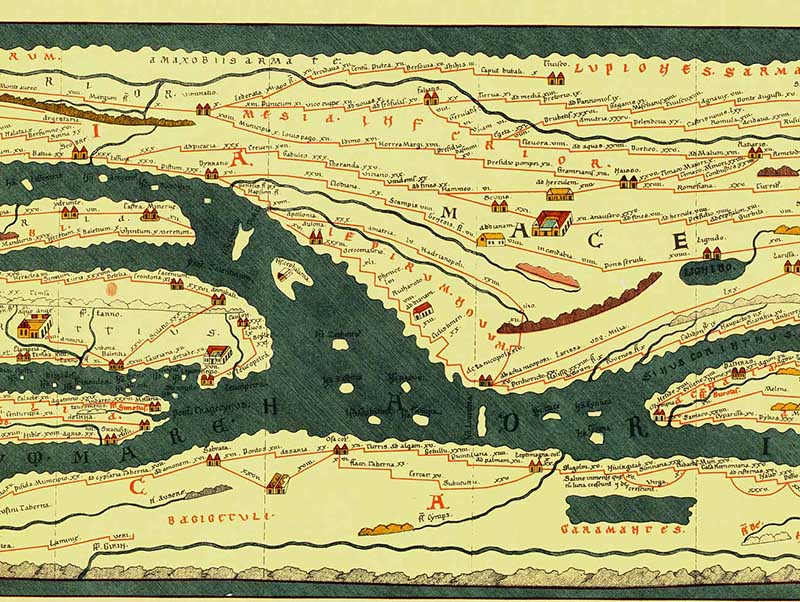
In the dense network of roads and pathways crossing Roman Italy, Giovinazzo also had its own distinct and recognized place. Under the name of Natiolum, it appears in the famous “Tabula Peutingeriana,” attesting to its presence in a well-connected region already buzzing with lively exchanges. The small settlement stood along an ancient coastal route – the so-called “Via Litoranea” – running along the Adriatic coast, connecting Capo di Leuca to Ancona, and continuing toward Fano, Bologna, and the Venetian lagoon. On this path, which between Barletta and Bari followed the ancient Via Gellia from Canosa, the towns of Bardulos (Barletta), Turenum (Trani), Natiolum, and Barium (Bari) were encountered in sequence. Further inland, along a parallel route, the Via Traiana, commissioned by the Optimus Princeps between 108 and 110 AD, connected Canusio (Canosa, though missing from the Tabula), Rudas (possibly Andria), Rubos (Ruvo), and Butuntos (Bitonto). It was within this dense network of centers – which has remained remarkably intact and legible to this day – that a unique balance was struck between the inland areas, oriented toward production, and the coast, open to trade, particularly by sea, thanks to the natural harbors it provided.
 Pro Loco Giovinazzo