
The Historical Parade of Giovinazzo: A Journey Through Memory, Faith, and Civic Identity
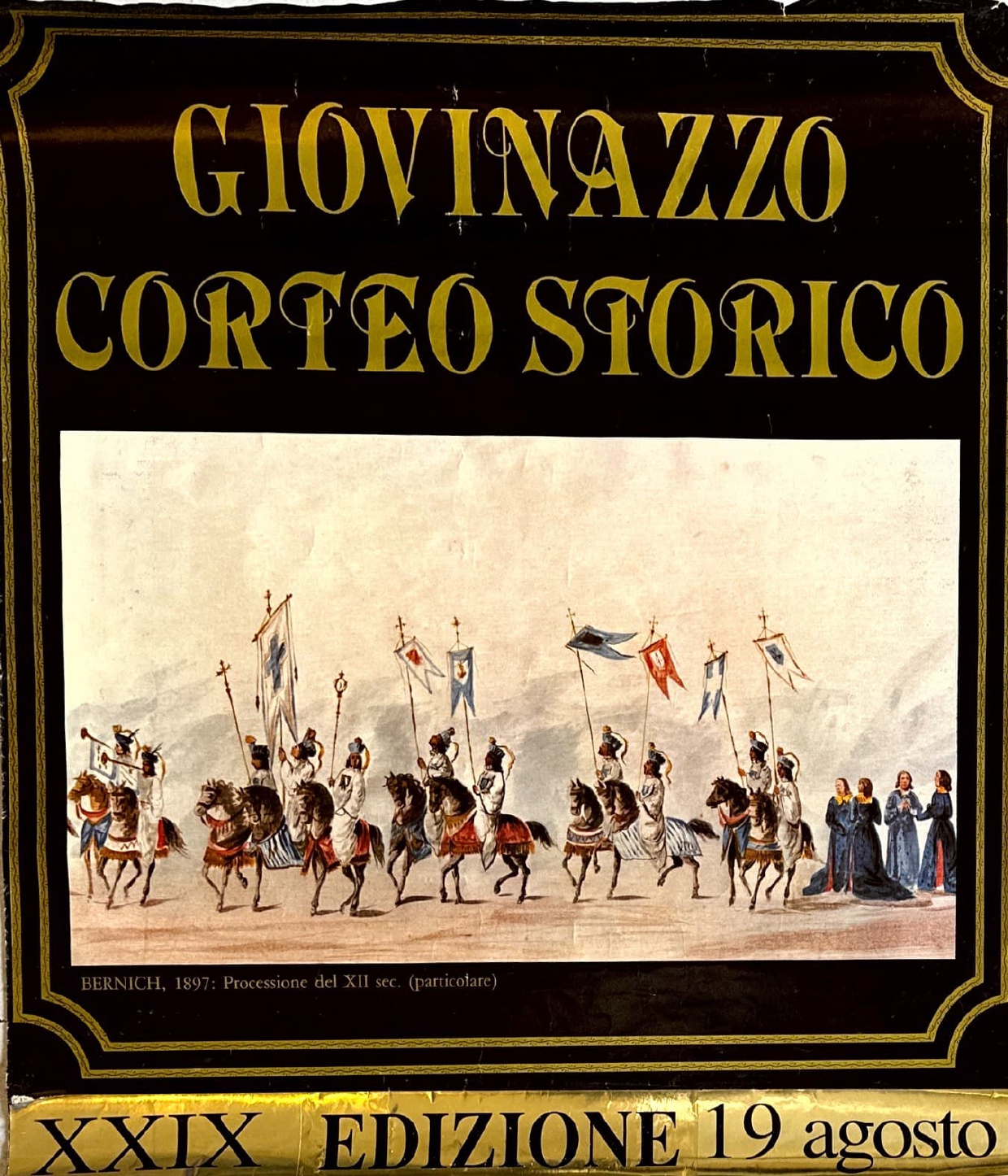
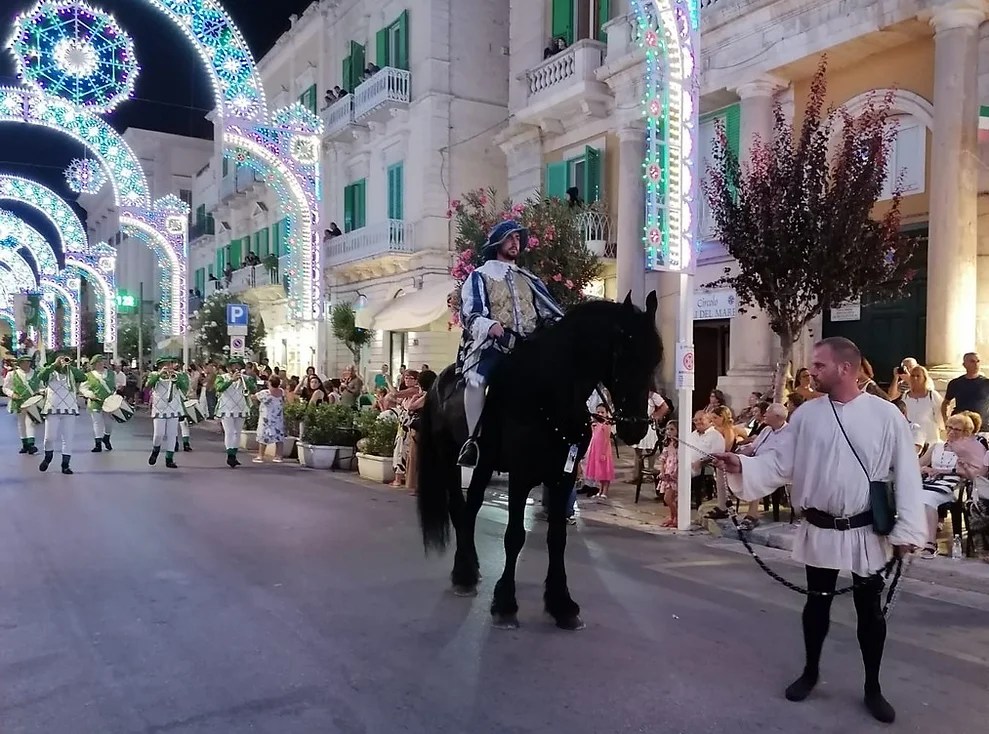
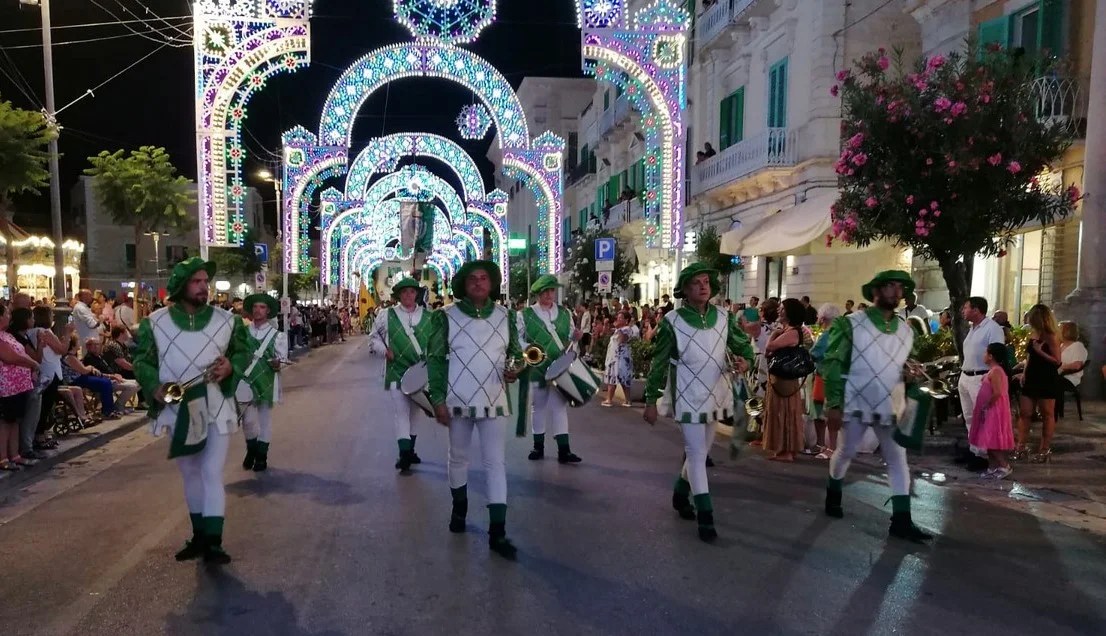
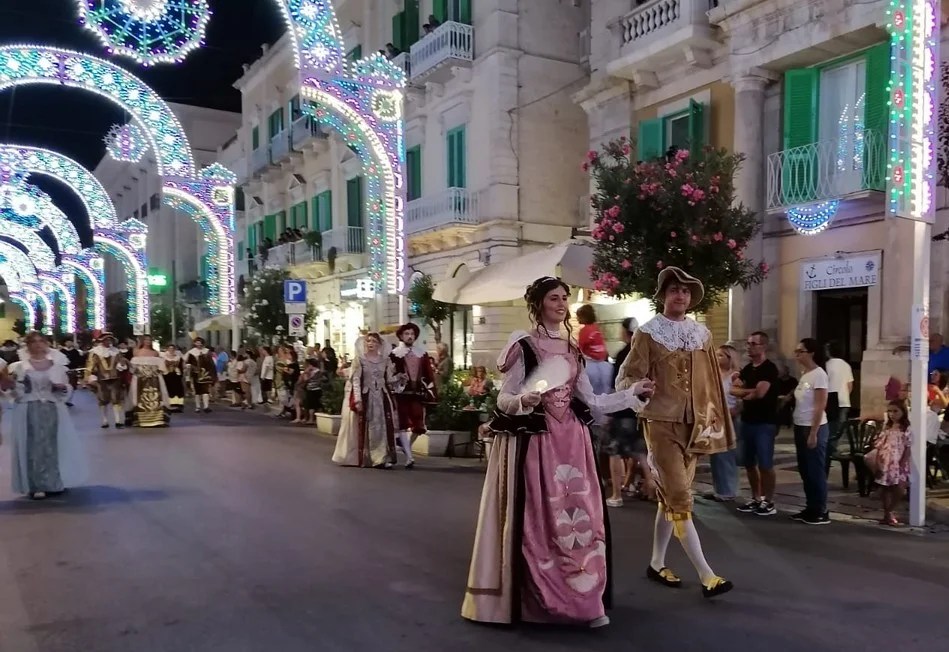
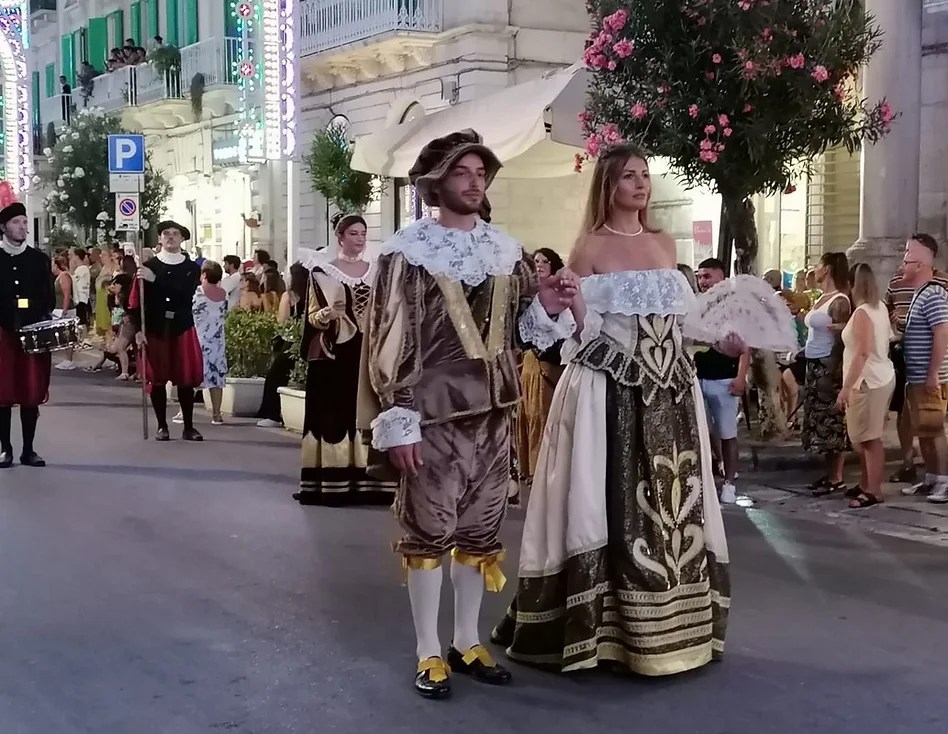
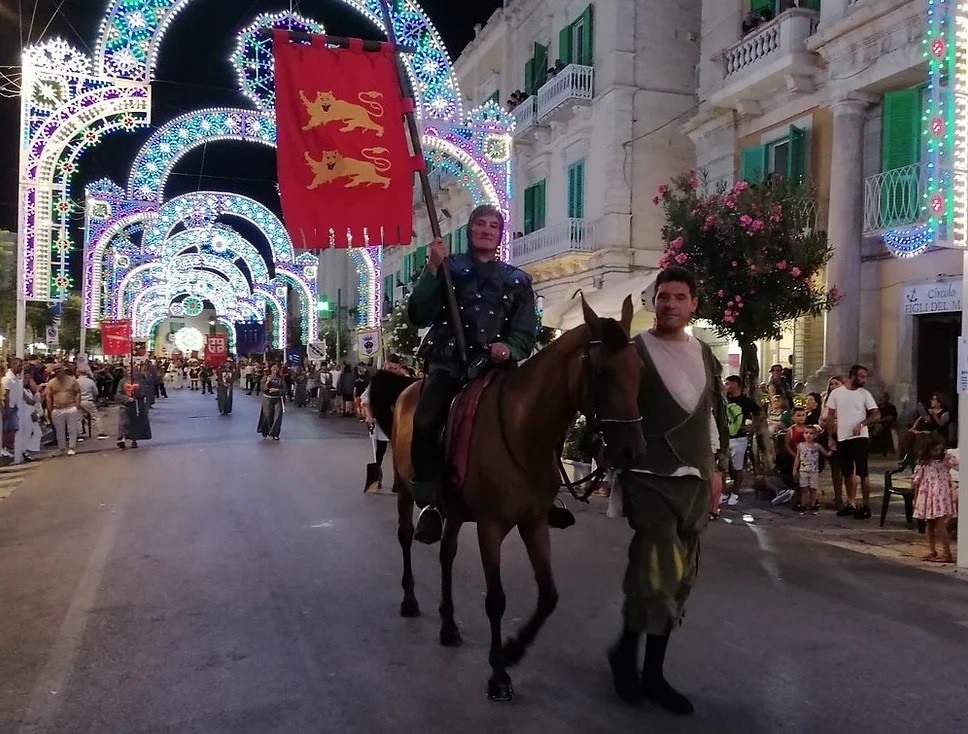
Every year, in the height of summer, Giovinazzo solemnly and spectacularly reenacts two pivotal moments in its religious and civic history through the Historical Parade of Our Lady of Corsignano. Organized by the Pro Loco of Giovinazzo and supported by local institutions, the event features over 200 costumed participants and unfolds in two distinct yet complementary parts. Together, they tell the story of the city’s deep devotion to the Virgin Mary and help preserve its collective memory.
La traslazione seicentesca dell’icona
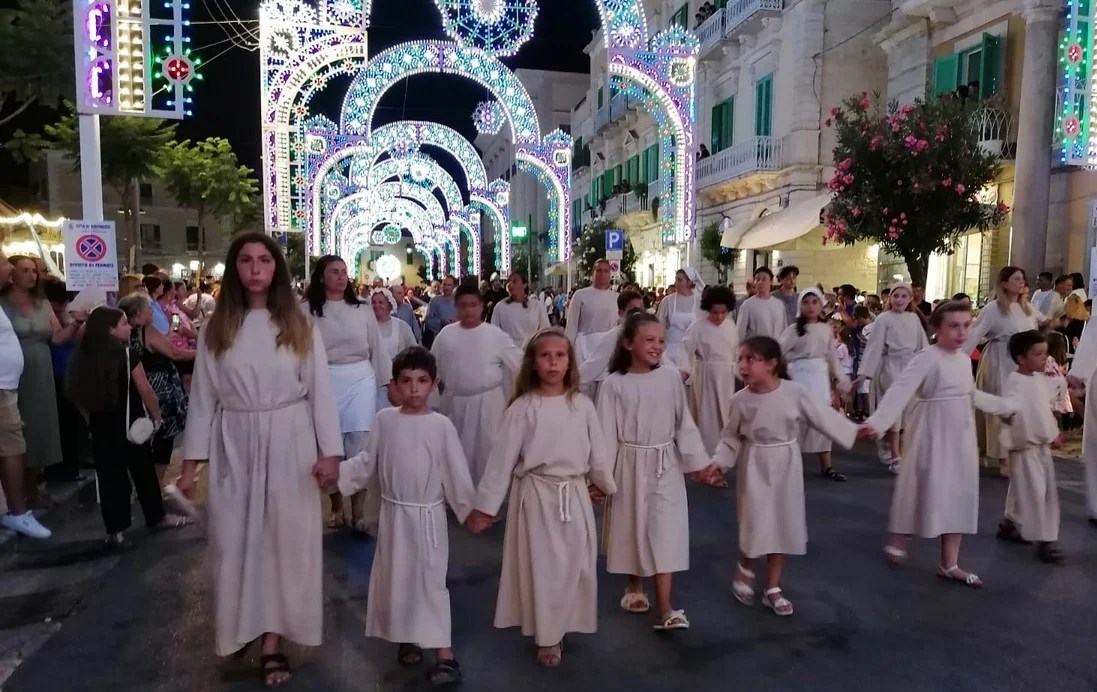
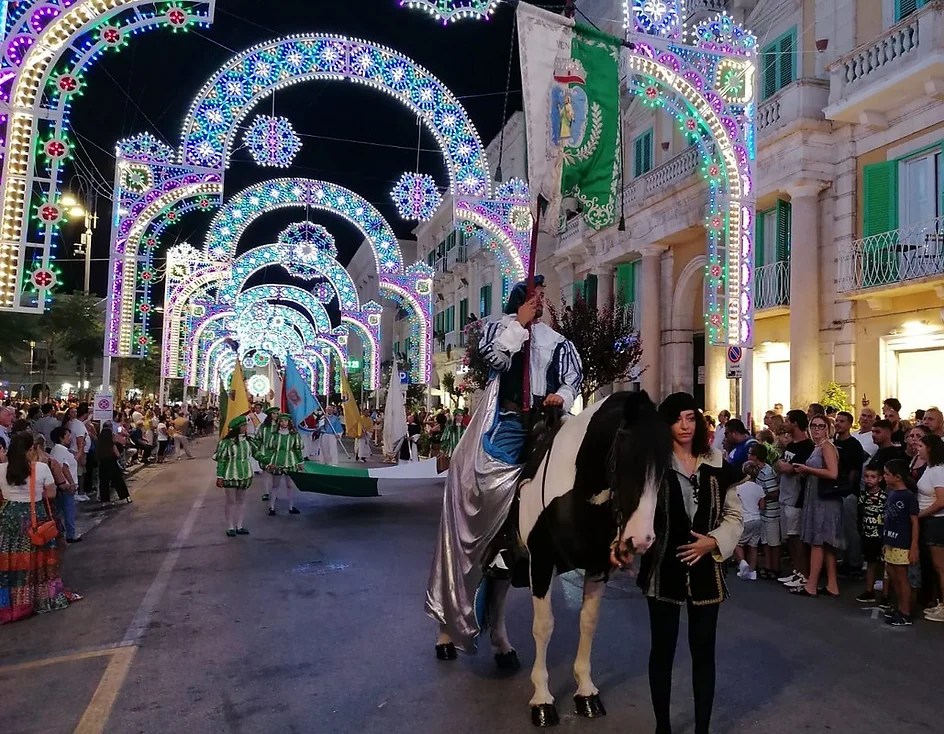
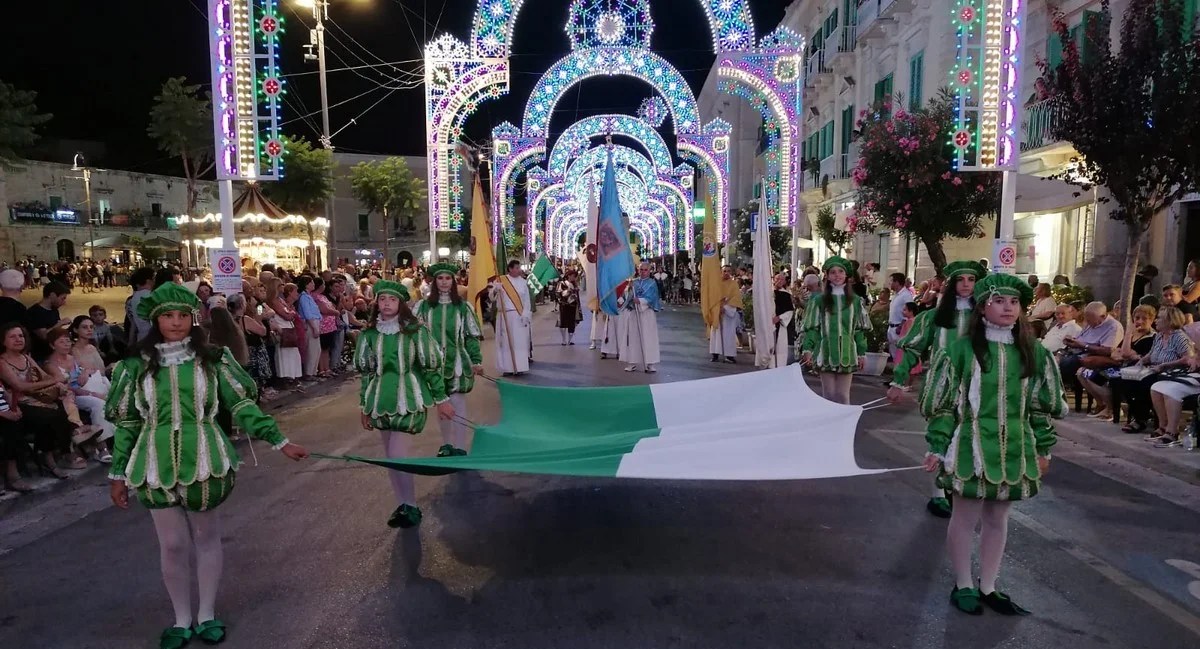
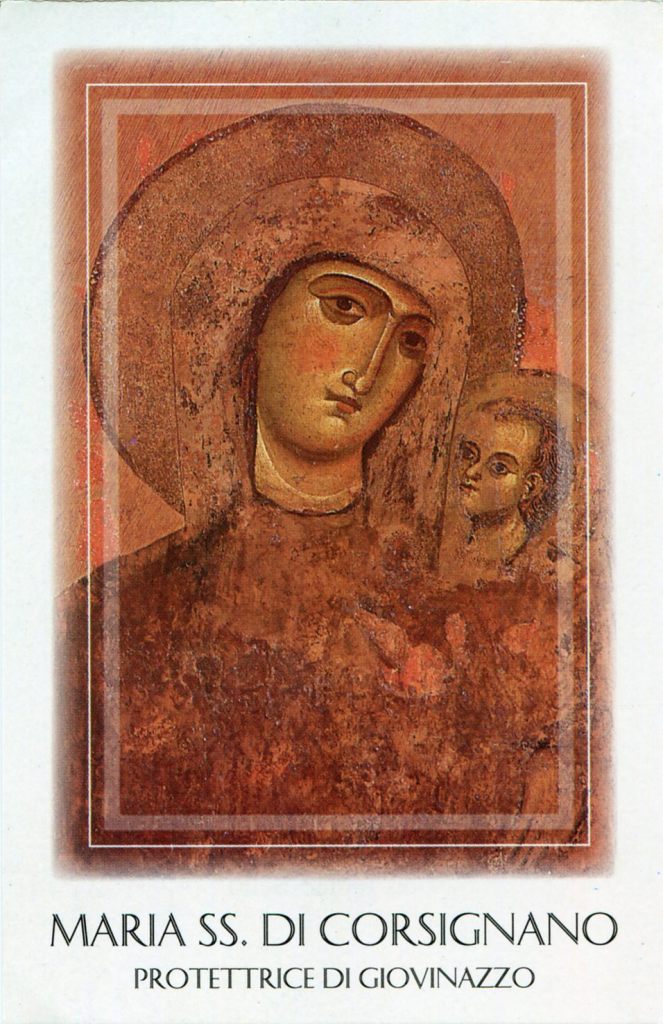
The first part of the parade, set in 1667, commemorates the transfer of the icon of Our Lady of Corsignano from the rural hamlet bearing the same name to the Cathedral of Santa Maria Assunta. This historical episode is documented by local sources and studies on Marian devotion, including the volume Maria SS. di Corsignano – Protettrice di Giovinazzo, curated by Michele Bonserio. The procession is led by a mounted standard-bearer carrying the banner of ancient Juvenatium, followed by young girls dressed in the traditional colors of the Universitas and the city’s religious confraternities, whose banners symbolize the spiritual vitality of the community.
Enhancing the historical reenactment are precise heraldic references, such as the coat of arms of Bishop Agnello Alfieri, appointed by Pope Clement X, and the insignia of feudal lord Niccolò Giudice, son of Domenico, Prince of Cellamare. These details are confirmed by archival sources preserved in the Analytical Inventory of the Chapter Archive of the Cathedral of Giovinazzo.





Medieval Penance and the “Miracle of the Rain”
The second part, set in the year 1188, is a moving reenactment of the medieval penitential procession in which the people of Giovinazzo implored the Virgin Mary to end a prolonged drought. According to tradition—also recounted in Hypotheses and Reinterpretations of the Iconography of Our Lady of Corsignano (De Ceglia – De Nicolo)—the miraculous rainfall that followed was seen as a sign of divine intercession. From that moment, the Virgin became known as the “Madonna of the Water” and was proclaimed Patroness of Giovinazzo in 1388.
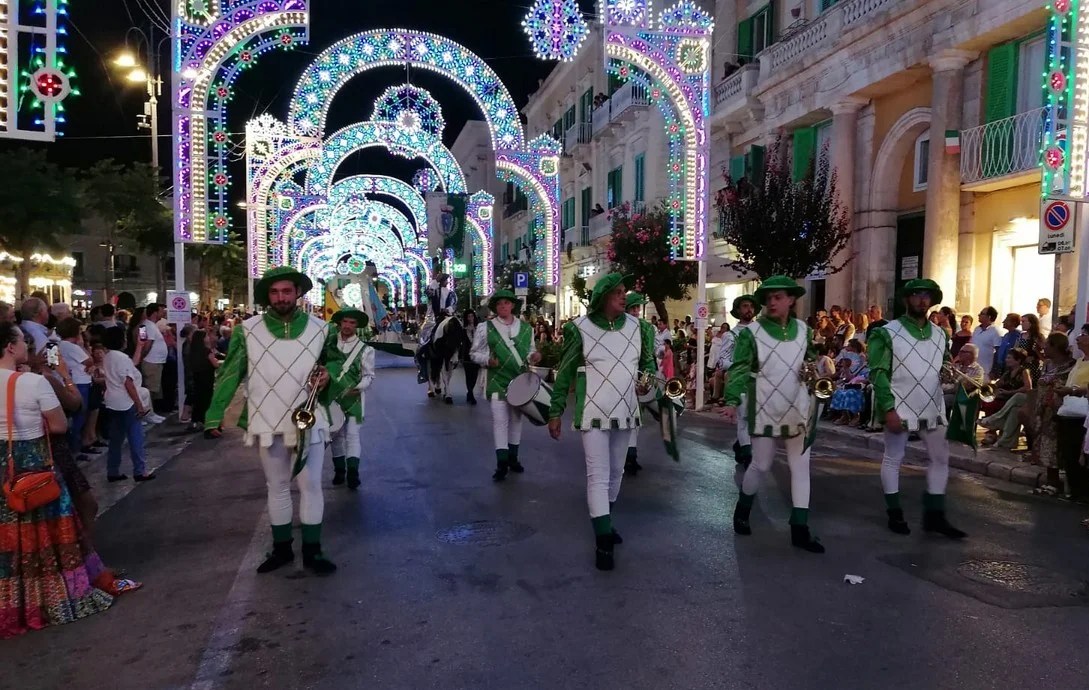
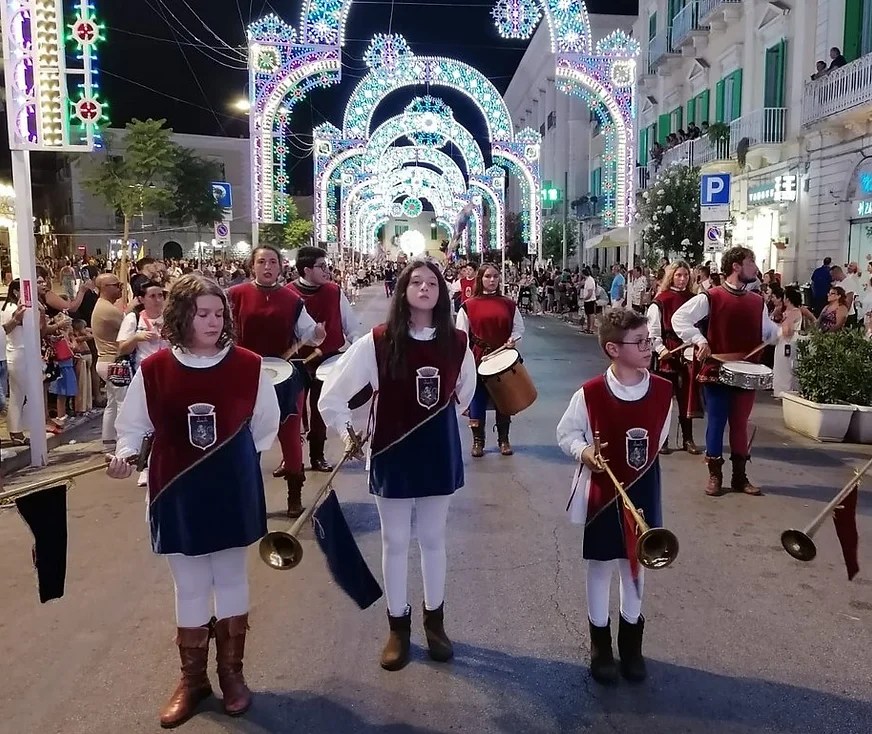
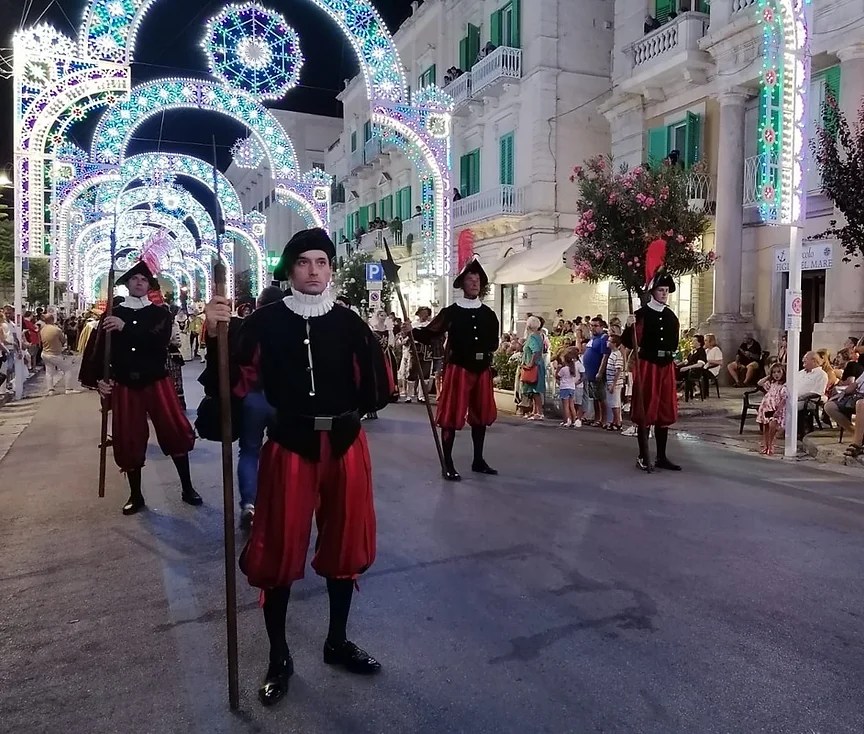
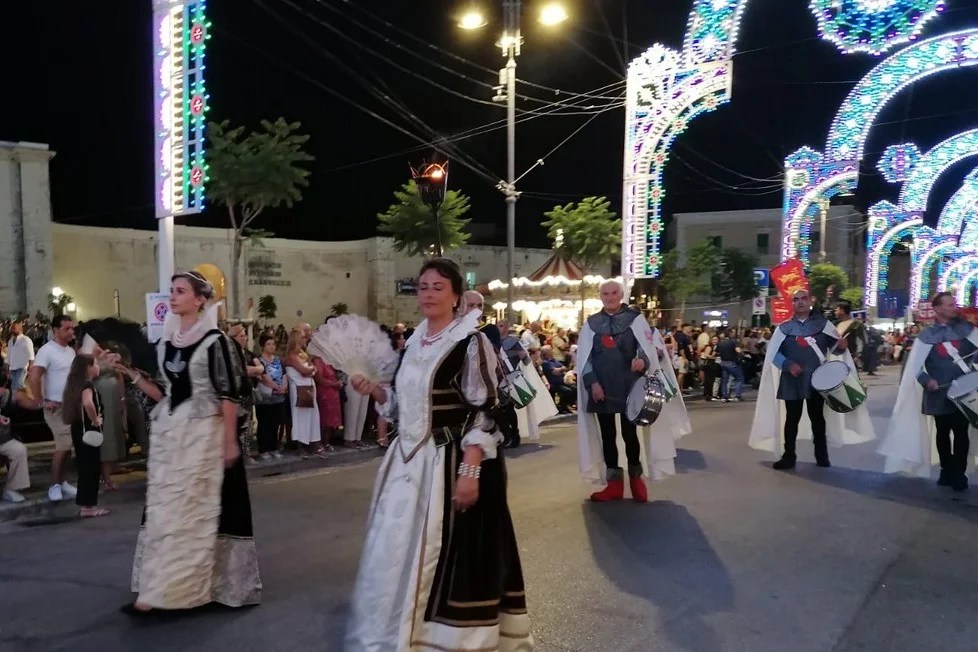
The reenactment features penitents in humble robes, representing some of the town’s oldest noble families (Brayda, Framarino, Siciliani, among others). They are preceded by drummers and followed by armed guards and the priest Don Erasmo Fanelli, accompanied by the French crusader Gereteo Alesbojsne. According to popular tradition, the crusader donated the icon to the hamlet as a token of gratitude for the care he received upon returning from the Crusades—an episode that still resonates in local folklore and has been documented in the local press (GiovinazzoViva, La Piazza di Giovinazzo).
The procession culminates with the appearance of the Marian icon, carried on the shoulders of local craftsmen and accompanied by a symbolic floral carpet, representing the rebirth of the land. The parade concludes with the institutional figures of the time—Judge, Protontino, Signator, Baglivo, and Catapano—followed by the townspeople, highlighting the collective nature of the event.
Sources consulted:
- Bonserio M., Maria SS. di Corsignano – Protettrice di Giovinazzo
- Bonserio M., Inventario analitico dei documenti dell’Archivio Capitolare, Gambini Editore, 2022
- De Ceglia D., De Nicolo F., Ipotesi e riletture dell’iconografia della Madonna di Corsignano, 2017
- Ministero della Cultura, Portale delle Rievocazioni Storiche
- Comune di Giovinazzo, Sezione Tradizioni
- Portale ARCO, Beni Culturali – scheda dell’icona mariana
- Articoli e reportage fotografici su GiovinazzoViva e La Piazza di Giovinazzo
 Pro Loco Giovinazzo